 Company
Professional Tree Risk Assessment in Chattanooga
Worried a tree could come down on your home — or told it has to, and not sure you believe it? Our arborists use industry-standard risk assessment methodology to give you an objective, documented risk rating and a clear recommendation: monitor, mitigate, or remove.
- Industry-standard assessment methodology
- Written reports that meet insurance and legal standards
- Objective ratings — never a sales tool for removals
Request a Risk Assessment
Tell us about the tree that concerns you. An arborist responds within one business day.
Your info is only used to schedule your estimate. No spam, ever.
Clarity in Three Steps
From "that tree worries me" to a documented, defensible answer.
Request Your Assessment
Fill out the 60-second form above or call 423.322.9236 and tell us what's concerning you.
On-Site Evaluation
An arborist evaluates the tree's structure, health, and site conditions, plus the target zone — what could be damaged if it fails. Most single-tree evaluations take 30 minutes to an hour.
Written Report & Recommendations
You receive a standardized risk rating and written findings within 3 to 5 business days, and we walk you through the options before any work is discussed.
When Do You Need a Risk Assessment?
Trees that look healthy from the ground can hide structural defects that lead to catastrophic failure. An assessment identifies the problem before it happens. Call us about:
- A leaning tree — or a lean that's suddenly gotten worse
- Large dead branches hanging over people or property
- Decay, cavities, or fungal growth on the trunk
- Storm damage with possible hidden cracks or root injury
- Trees near structures, walkways, or gathering areas
Being told a tree "has to come down"? An objective risk rating gives you data, not a sales pitch. We don't use assessments to upsell removals.

Every Risk Assessment Includes
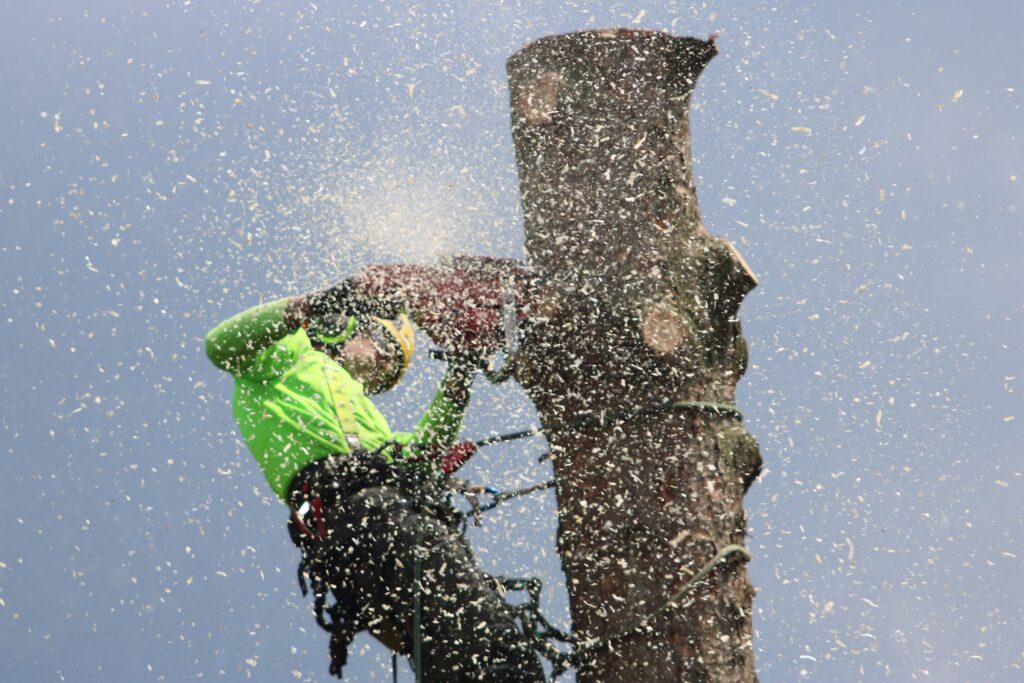
- On-site visual assessment by professional arborists
- Evaluation of tree structure, health, and site conditions
- Target zone analysis — what could be hit if the tree fails
- Standardized risk rating using professional methodology
- Written report with findings and recommended actions
- Coordination with Outdoor Inc's grading, drainage, planting, and lighting crews if your project calls for more than tree work
Reports are formatted to meet insurance, legal, and municipal documentation standards. For advanced cases we offer resistograph testing and aerial inspection, and our arborists have experience providing expert testimony in tree-related disputes.
Chattanooga Property Owners on Our Assessments
Read All Reviews on Google →“Very quick service at a very fair price. We had a large hickory fall on a steep slope close to our house on Tuesday evening. I called Wednesday morning and they had it fully removed by Friday.”
“Professional. That's the one-word description of Urban Tree. One call and an estimator arrived to prepare a quote that afternoon. The workers arrived with all the equipment required to do the job safely. Very highly recommended.”
“Would absolutely recommend Urban Tree to anyone looking for quality work! This is our second time using their service and they show up to impress. Not a trace to be found after they finished the job.”
Risk Assessment Questions, Answered
What does a tree risk assessment actually evaluate?
Three components: the likelihood the tree (or part of it) fails, the likelihood a failure strikes a target, and the consequences of that impact. The result is a standardized risk rating — the same methodology used by municipalities, utilities, and insurance companies nationwide.
Are risk assessments required by insurance or local code?
Chattanooga doesn't currently mandate routine residential assessments, but insurance companies increasingly request them after storm damage, claims, or liability disputes. Many commercial property managers and HOAs run annual assessments as part of liability management — a documented assessment on file demonstrates due diligence if an incident occurs.
How long does an assessment take?
A single tree typically takes 30 minutes to an hour on-site, with the written report delivered within 3 to 5 business days. Full-property assessments can take a day or more depending on tree count.
What happens after the assessment?
Your report details each tree's risk rating and recommended action: monitoring on a schedule, mitigation (pruning, cabling, or bracing), or removal when risk can't be adequately reduced. We walk you through it and answer every question before any work is proposed.
Can the report be used for insurance claims or legal matters?
Yes. Our reports are formatted to meet insurance and legal documentation standards, and our arborists have provided expert testimony in tree-related property disputes.
What if the tree is my neighbor's?
A documented, objective assessment is exactly what those conversations need. We assess the tree from your property (or with the neighbor's permission), and the written report gives both parties — and their insurers — a factual basis for deciding what happens next.
Know Where Your Trees Stand
Objective, documented risk ratings from trained arborists. Monday through Friday, 7:00 AM to 4:00 PM.