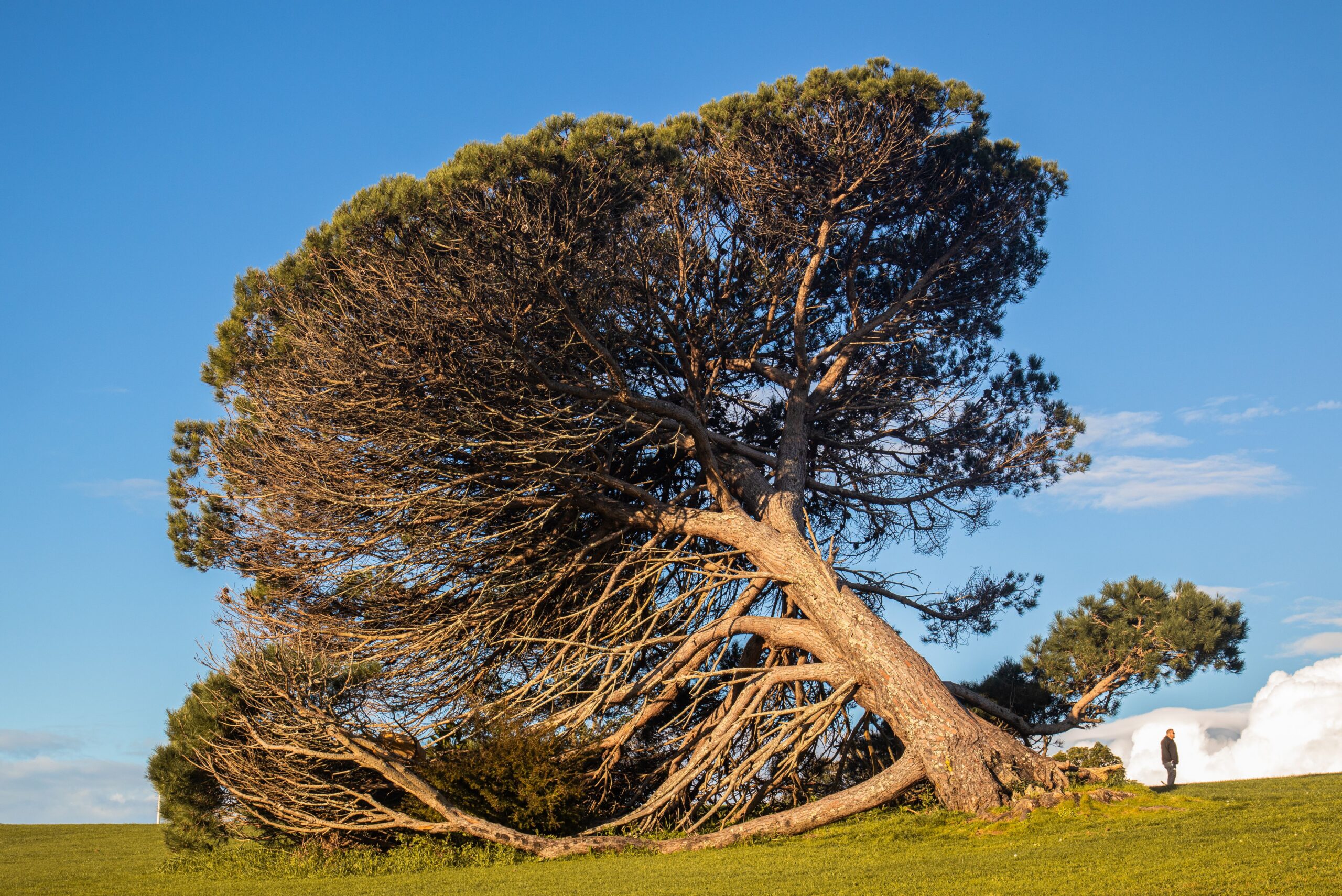
A leaning tree rarely develops overnight. By the time you notice the tilt, something below the surface has usually been building for weeks, months, or even years. Some leans are harmless quirks of growth. Others are the first visible sign that a tree is losing its grip on the ground beneath it.
Telling the difference matters, especially in Chattanooga, where clay-heavy soil, seasonal storms, and shallow bedrock in some neighborhoods all play a role in tree stability. Here’s what our certified arborists look for when a client calls about a leaning tree, and what typically causes the problem in the first place. If you’ve spotted a leaning tree on your own property, this breakdown will help you decide how urgently it needs attention.
What Makes a Tree Start to Lean?
A tree stays upright because its root system anchors it against gravity, wind, and the weight of its own canopy. When that anchoring system is compromised, even slightly, the tree shifts to a new resting angle. A leaning tree is really a story about what’s happening underground, whether that’s root failure, soil movement, or a structural weakness in the trunk itself. In most cases, a leaning tree is telling you something about its roots long before the canopy ever looks unhealthy.
Not every lean means trouble. Some trees develop a natural curve early in life, reaching for sunlight around a neighboring structure, and then grow upright again once they clear the obstruction. This kind of gradual, self-corrected lean is usually stable and nothing to worry about.
A new lean, a lean that’s gotten worse, or one that appeared suddenly after a storm is a different story entirely.
Root Plate Damage
The root plate is the mass of roots and soil directly beneath a tree’s trunk that keeps it anchored. When roots break, decay, or get cut, the root plate loses its holding power and the tree can tip. This is one of the most common reasons a healthy-looking tree suddenly leans after high winds or heavy rain.
Soil Saturation and Erosion
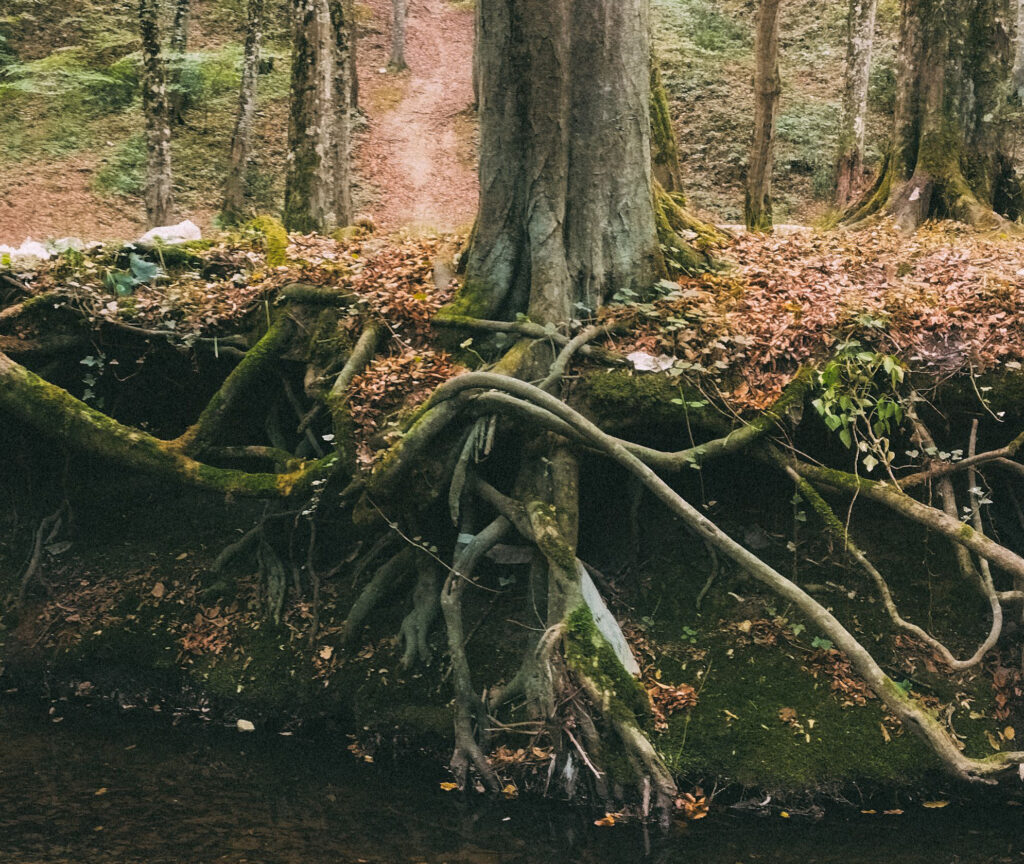
Chattanooga’s clay soil holds water well past a storm’s end. Saturated soil loses much of its structural strength, and roots can no longer grip it the way they would in drier conditions. Once the ground softens enough, a tall canopy acting like a sail in the wind can push the whole root system sideways.
Root Disease or Decay
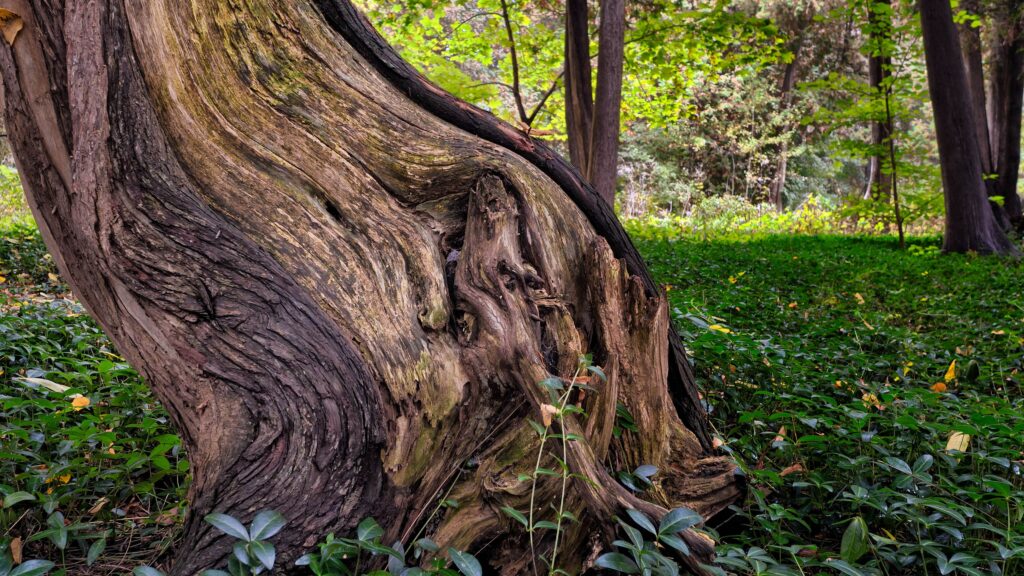
Fungal pathogens and root rot slowly consume the wood that gives roots their strength. A tree with internal root decay may show no outward symptoms until a lean develops, often abruptly, once enough support has been lost. Mushrooms or conks growing near the base of the trunk are a strong clue that decay is already underway below ground.
One-Sided Growth and Wind Exposure
Trees growing at the edge of a property line, near a clearing, or along a ridge often develop asymmetrical canopies that catch more wind on one side. Over years, this uneven pressure can gradually tilt the tree, especially if the root system on the downwind side is shallow or restricted.
Construction and Excavation Damage
Digging, trenching, or grading near a tree’s root zone severs the roots that hold it in place. Homeowners are sometimes surprised that a lean appears months after a construction project, but root systems can take time to fail once support has been compromised.
Is a Small Lean Always a Problem?
Not necessarily. A tree that has leaned gradually over many years and developed a curved trunk with even branch growth on both sides has usually reached equilibrium. Its roots have adapted to the angle, and the tree is stable in that position.
The trees worth worrying about are the ones with a sudden change: a lean that wasn’t there last month, one that’s gotten more pronounced, or one that appeared right after a storm. These situations call for a professional evaluation rather than a wait-and-see approach.
How Can You Tell If a Leaning Tree Is Dangerous?
A few warning signs point to an unstable root system rather than a harmless, long-term lean:
- Soil that’s cracked, mounded, or lifted on the side opposite the lean
- Exposed roots that weren’t visible before
- The trunk continuing to move or sway in light wind
- New cracks or splits near the base of the trunk
- Mushrooms or fungal growth at the root flare
Any one of these signs, especially paired with a recent increase in lean angle, suggests the root plate has already started to fail.
How Do Arborists Assess a Leaning Tree?
When our arborists evaluate a leaning tree, we start with the ground, not the canopy. We look for soil heaving, root exposure, and signs of decay at the base, then work upward to check the trunk for cracks, cavities, or included bark. Degree of lean matters, but so does direction: a tree tilting toward a house, driveway, or fence line carries far more risk than one leaning into open yard space.
Research on root-related tree failures backs up this ground-first approach. Purdue University Extension notes that when more than 30 percent of a tree’s root system has become exposed or compromised, removal is typically the safer long-term option rather than attempting to stabilize the tree in place. That threshold reflects just how much of a root system a tree needs intact to remain structurally sound.
We also factor in species. Trees with naturally shallow root systems, like many spruces and some maples, are more prone to becoming a leaning tree after saturated soil or high winds than deep-rooted species like oaks. Knowing which species you have on your property helps set realistic expectations for how much lean is normal versus concerning.
Can a Leaning Tree Be Corrected?
Sometimes, yes. Young trees with mostly intact root systems can occasionally be straightened, staked, and guyed while new roots establish. This works best when the lean was caught early and the root damage is limited.
Mature trees are a different matter. Once a large tree’s root plate has lifted or a significant percentage of its roots have failed, straightening it isn’t realistic, and attempting to do so can be dangerous. At that point, the safest and most responsible option is a planned removal before the tree fails on its own terms, in its own time.
When Should You Call a Professional Arborist?
Call sooner rather than later if you notice a new or worsening lean, especially after a storm, near a structure, or alongside any of the warning signs above. A tree risk assessment gives you an objective, arborist-backed evaluation of what’s really happening below the surface, rather than a guess based on how the tree looks from the porch.
Waiting rarely improves the outlook. A leaning tree with a compromised root system tends to get worse, not better, and the cost of removal only grows once a tree becomes an active hazard to a home, vehicle, or power line. A quick call now is almost always cheaper, and safer, than dealing with a fallen tree later.
Frequently Asked Questions
Is it normal for a tree to lean slightly?
Yes, in some cases. Trees that have grown at a slight angle for years, with a curved trunk and even branch growth on both sides, have usually adapted and stabilized. A slow, long-standing lean is different from a sudden or worsening one.
How much lean is considered dangerous?
There’s no single number that applies to every tree, but any sudden change in angle, or a lean paired with soil heaving and root exposure, should be evaluated by a professional regardless of the exact degree.
Can I straighten a leaning tree myself?
We don’t recommend it. Straightening a tree without understanding the extent of the root damage can worsen the problem or create a sudden safety hazard. This is a job for a trained arborist with the right equipment and assessment tools.
Does a leaning tree always need to be removed?
No. Young trees with healthy, intact root systems are sometimes able to be stabilized. Mature trees with significant root plate damage are usually safer to remove than to attempt to save.
What should I do if my tree starts leaning after a storm?
Keep people, vehicles, and pets away from the area and schedule a tree risk assessment as soon as possible. Storm-related leans can indicate root plate failure that worsens quickly.
Will insurance cover a leaning tree that falls?
Coverage varies by policy and by whether the tree was already known to be hazardous. Addressing a leaning tree proactively is almost always less costly than dealing with the aftermath of a fallen one.
Concerned About a Leaning Tree on Your Property?
A leaning tree is one of the clearest signals your landscape sends that something needs attention. Our certified arborists can evaluate the root system, determine what’s driving the lean, and recommend the safest path forward, whether that’s monitoring, stabilization, or removal. Contact Urban Tree to schedule a tree risk assessment and get a clear answer about what’s happening beneath your leaning tree.