Is It Safe to Remove a Tree Yourself?
A large oak leans toward your roofline after a storm. Branches scrape the gutters. You walk outside, look up, and wonder: how hard could it be to just cut it down yourself? A chainsaw, a Saturday afternoon, some YouTube videos. It sounds manageable until you start reading about the things that can go wrong.
To remove a tree is one of the most genuinely dangerous home projects a person can take on. According to the U.S. Bureau of Labor Statistics, tree trimming and removal consistently ranks among the most hazardous occupations in the country, with a fatality rate roughly 30 times higher than the average for all industries. Those numbers represent trained professionals using proper equipment. For homeowners attempting removal without that training, the risks climb even higher.
This article breaks down exactly what DIY tree removal involves, where things go wrong, what the law says in Tennessee, and when calling a professional crew is the only sensible option.
Why Do So Many Homeowners Consider DIY Tree Removal?
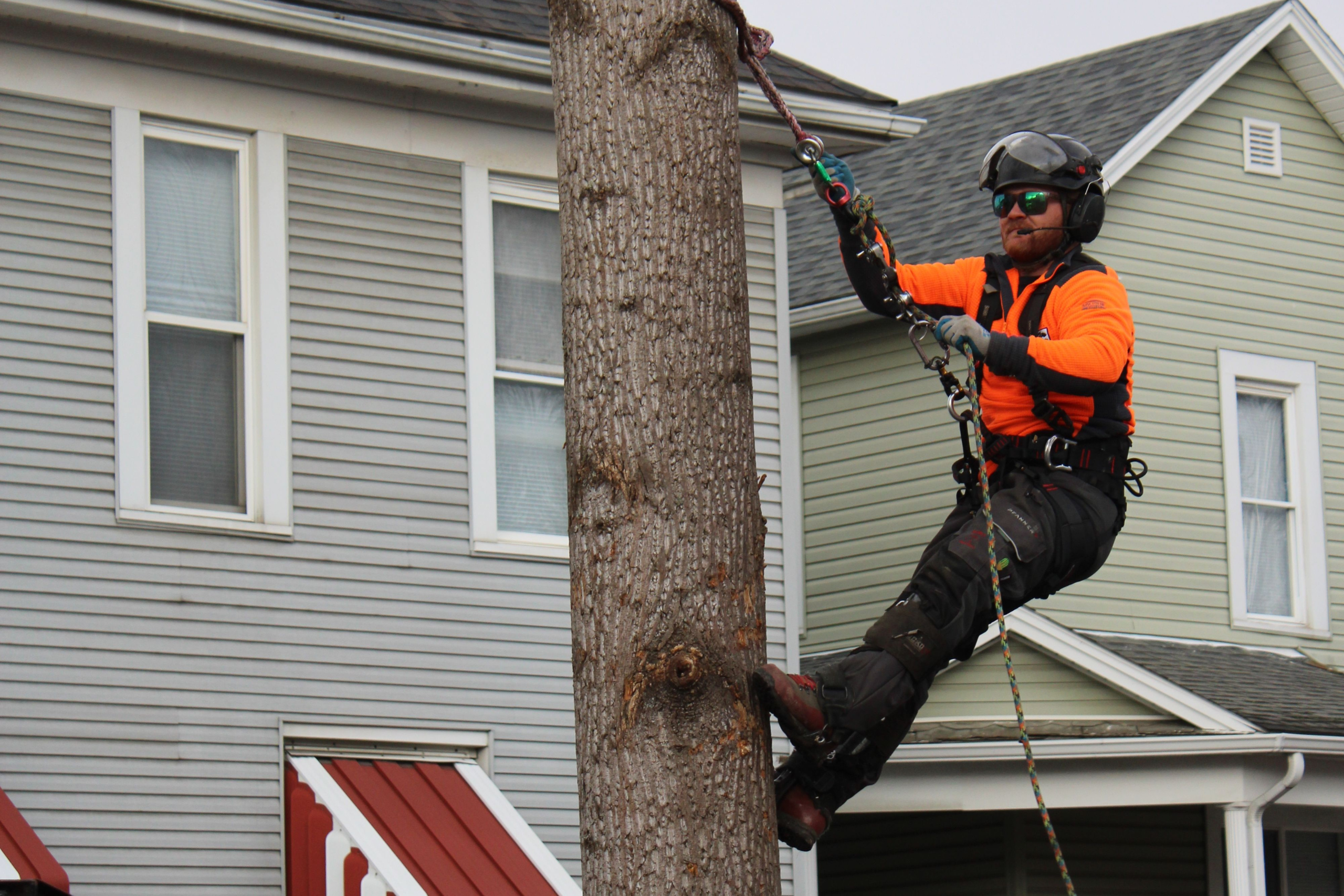
The appeal is understandable. Tree removal quotes can feel steep, especially for large trees or multiple removals at once. Homeowners with some outdoor experience and access to a chainsaw sometimes assume the job is similar to cutting firewood or clearing brush. In very limited cases, like removing a small, dead sapling in an open yard, that assumption is not entirely wrong.
The problem is that most trees requiring removal are not small, dead saplings in open yards. They are mature trees near structures, fences, power lines, or neighboring property. These situations require technical knowledge, specialized equipment, and the kind of physical coordination that comes from doing this work repeatedly, not occasionally.
What Are the Real Risks of Removing a Tree Without Professional Help?
Tree removal goes wrong in a few predictable ways, and most of them involve physics working against the person doing the cutting.
Can You Predict Where a Tree Will Fall?
One of the most common misconceptions in removing a tree is that a tree falls in a straight line based on the direction of the cut. Professional arborists use a combination of lean assessment, weight distribution analysis, rigging, and notch geometry to control direction. Without that knowledge, a tree can twist, barberchair (split upward through the trunk unexpectedly), or fall in an entirely different direction than intended. The result can be a crushed vehicle, a damaged roof, a downed fence, or worse.
What Happens When a Tree Hits a Power Line?
Trees near power lines are not a DIY project under any circumstances. Contact with a live line can cause electrocution instantly. Even lines that appear inactive can carry current. In Tennessee, work involving trees within ten feet of a power line requires coordination with the utility company and, in many cases, a licensed line-clearance arborist. Urban Tree crews handle these situations regularly and follow established safety protocols that cannot be replicated with consumer equipment.
What About Chainsaw Injuries?
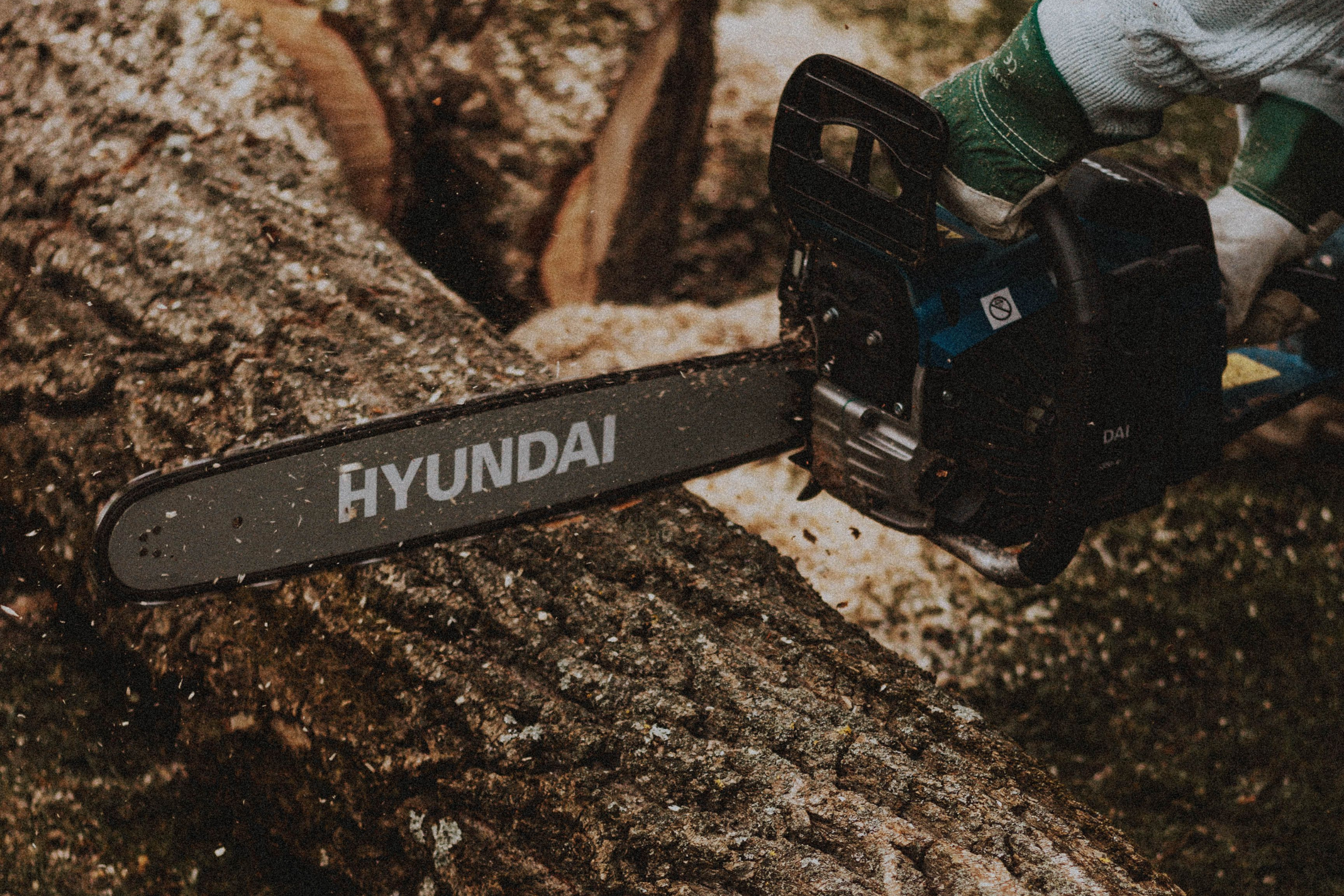
Chainsaw kickback is responsible for a significant portion of serious injuries in both professional and DIY settings. It happens in a fraction of a second when the chain contacts a pinch point or the nose of the bar strikes a hard surface. Professional crews wear chainsaw chaps, cut-resistant gloves, helmets with face shields, and steel-toed boots. Most homeowners cutting a tree once every few years own none of that equipment. A chainsaw injury can happen before a person has time to react, and the cuts are severe.
Is Rope and Rigging Equipment Enough to Keep Things Controlled?
Rigging a tree properly requires knowledge of load calculations, rope selection, anchor points, and friction devices. A rope thrown over a branch and tied to a truck is not rigging. It is a setup for a rope failure, a branch split, or a load that overpowers the vehicle doing the pulling. When a section of trunk or a large limb falls without proper control, the energy involved is substantial enough to cause serious damage or injury to anyone nearby.
What Does Tennessee Law Say About Tree Removal on Private Property?
In Tennessee, homeowners are generally permitted to remove trees on their own property without a permit, with some exceptions. Many municipalities in the Chattanooga area have local ordinances regarding protected trees, trees above a certain diameter, or trees within easements. Soddy Daisy, Ooltewah, Signal Mountain, and other communities within Urban Tree’s service area each have their own regulations that can vary by location.
Removing a tree that falls into a protected category, or that sits on or near a utility easement, without proper authorization can result in fines. More critically, if a homeowner removes a tree without permits where they were required and the tree causes damage, insurance coverage may be affected. A professional company pulls the required permits as part of the job, which removes that liability from the homeowner entirely.
What Trees Can a Homeowner Reasonably Remove Without a Professional?
There is a narrow category of tree removal that a careful, experienced homeowner can handle safely. A small tree, generally under 15 feet in height, with a trunk diameter under six inches, standing well clear of any structures, fences, overhead lines, or neighboring property, in open ground with a clean drop zone, is the type of situation where DIY removal carries the least risk.
Even in that scenario, proper safety equipment is still required: a helmet, face protection, chainsaw chaps, gloves, and steel-toed boots. Anyone who does not already own that equipment will find the cost of purchasing it approaches or exceeds the cost of a professional removal for a tree that size.
As soon as any of the following factors are present, the project moves into professional territory: the tree is over 20 feet tall, there is any structure within falling distance, power lines are nearby, the tree is leaning, dead wood is present in the canopy, the root system is compromised, or the tree is close to a property line. Each of those conditions adds a layer of complexity that training and experience handle, and that guesswork does not.
How Does a Professional Tree Removal Company Approach a Job Differently?
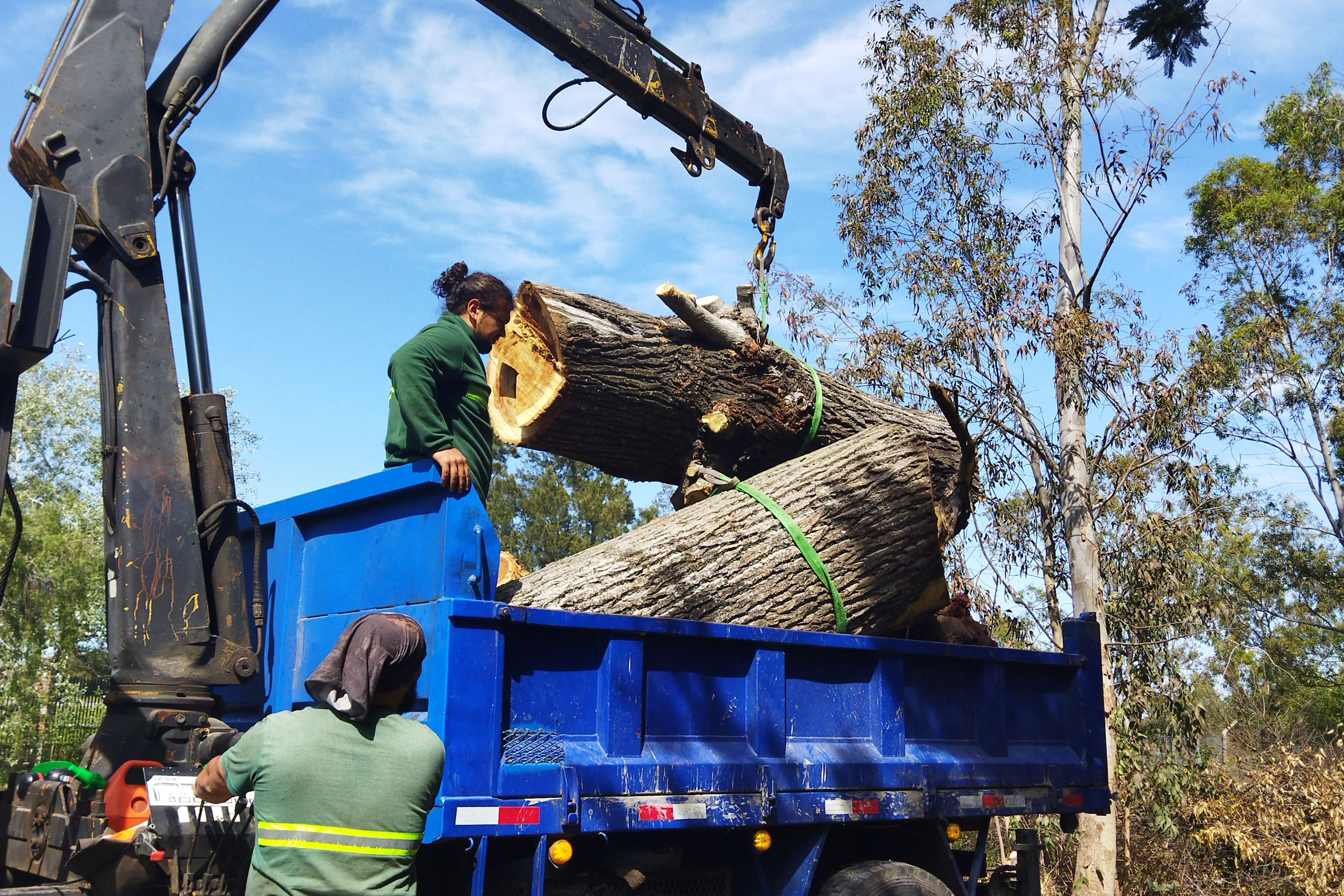
Urban Tree’s 55-person crew in the greater Chattanooga area handles both residential and large-scale commercial removals. A job that looks straightforward from the street can reveal significant complications once a certified arborist assesses it in person. The assessment covers the tree’s overall health, any structural defects, the soil condition around the base, proximity to utilities, and the safest sectioning approach.
For large trees near structures, the crew does not fell the tree in one piece. Sections are cut from the top down and lowered using ropes and rigging, controlling each piece through its descent before moving to the next section. Chippers, cranes, and aerial equipment are used depending on what the site requires. The entire process is designed to bring a tree down without contacting anything it should not.
Professional crews also carry liability insurance and workers’ compensation coverage. If something goes wrong on a DIY removal and a neighbor’s fence gets crushed or a window gets broken, the homeowner absorbs that cost directly. When a licensed company is on the job, their insurance covers any damage that occurs during the work.
What About the Stump After Removal?
A removed tree leaves behind a stump, and stumps present their own set of problems. They become tripping hazards, attract beetles and other insects that can spread to healthy trees nearby, and make lawn maintenance more difficult. Stump sprouting, where the root system sends up new growth repeatedly, can persist for years if the stump is left in place.
Stump grinding is the standard solution and, like the removal itself, is not a DIY job in most cases. Stump grinders are heavy, powerful machines with a rotating carbide cutting wheel that works through hardwood root systems. Rental units exist, but operating them safely requires knowing how to manage the machine’s kickback, identifying underground utilities before grinding, and understanding how deep to grind based on the species and the intended use of the space afterward. Grinding too shallow leaves roots that continue to decay and can create voids in the soil over time.
Frequently Asked Questions About DIY Tree Removal
Is it legal to remove a tree on your own property in Tennessee?
In most cases, yes. Tennessee law generally allows homeowners to remove trees on their own property without a state-level permit. Local ordinances in Chattanooga and surrounding communities may require permits for trees above a certain size or in protected zones. Checking with local planning or public works departments before cutting is worth the time, particularly for mature trees.
What is the most dangerous part of removing a tree yourself?
Controlling where the tree falls is the single greatest hazard in any removal. Misjudging the lean, failing to account for weight distribution in the canopy, or cutting incorrectly can cause the tree to move in an unexpected direction. Combined with the speed at which this happens, there is almost no time to react once the trunk begins to move.
Does homeowners insurance cover damage from a DIY tree removal gone wrong?
Coverage varies by policy. Some homeowners insurance policies cover accidental property damage, including tree falls that damage structures. Others exclude damage caused by the homeowner’s own actions if negligence is determined. Contacting your insurance provider before starting any removal work is the best way to understand what is and is not covered under your specific policy.
How much does professional tree removal cost in the Chattanooga area?
Pricing depends on the size of the tree, its location, accessibility, and whether stump grinding is included. Small residential trees fall in the lower range, while large trees close to structures or requiring crane work are priced accordingly. Urban Tree provides free estimates. Calling (423) 322-9236 or visiting geturbantree.com is the fastest way to get an accurate quote for your specific situation.
Are there any trees I can safely remove myself?
Small trees under approximately 15 feet in height, with a trunk diameter under six inches, in an open area with no structures, utilities, or neighboring property within falling distance, can be removed with appropriate safety gear. Anything outside those parameters is a job for a trained crew. When in doubt, a professional assessment is free and removes the guesswork entirely.
How do I know if a tree needs to be removed versus treated?
Not every declining tree needs to come down. Urban Tree’s plant healthcare service addresses disease, pest pressure, soil deficiencies, and structural concerns that can be managed without full removal. A certified arborist can assess whether a tree has enough structural integrity and health to be worth treating or whether removal is the safer and more practical choice.
When Should You Call Urban Tree?
If the tree in question is large, leaning, dead, diseased, or within reach of any structure or utility line, the call to a professional should happen before any other step. Urban Tree has served homeowners and commercial property managers across the Chattanooga area since 2013, from Lookout Mountain and Signal Mountain to Ooltewah, Collegedale, and Soddy Daisy. The 55-person crew handles jobs of every scale, from single residential removals to large commercial site clearing.
A free estimate takes the uncertainty out of the process. The team walks the property, evaluates the tree, and provides an accurate quote with no obligation. Reach out at (423) 322-9236 or visit geturbantree.com to schedule an assessment. The cost of a professional removal is almost always far less than the cost of a DIY removal that goes wrong.
How much does professional tree removal cost in the Chattanooga area?
Pricing depends on the size of the tree, its location, accessibility, and whether stump grinding is included. Every job is different, so the only way to get an accurate number is with an on-site assessment. Urban Tree provides free estimates with no obligation. Call (423) 322-9236 or visit geturbantree.com to schedule one.