
 Company
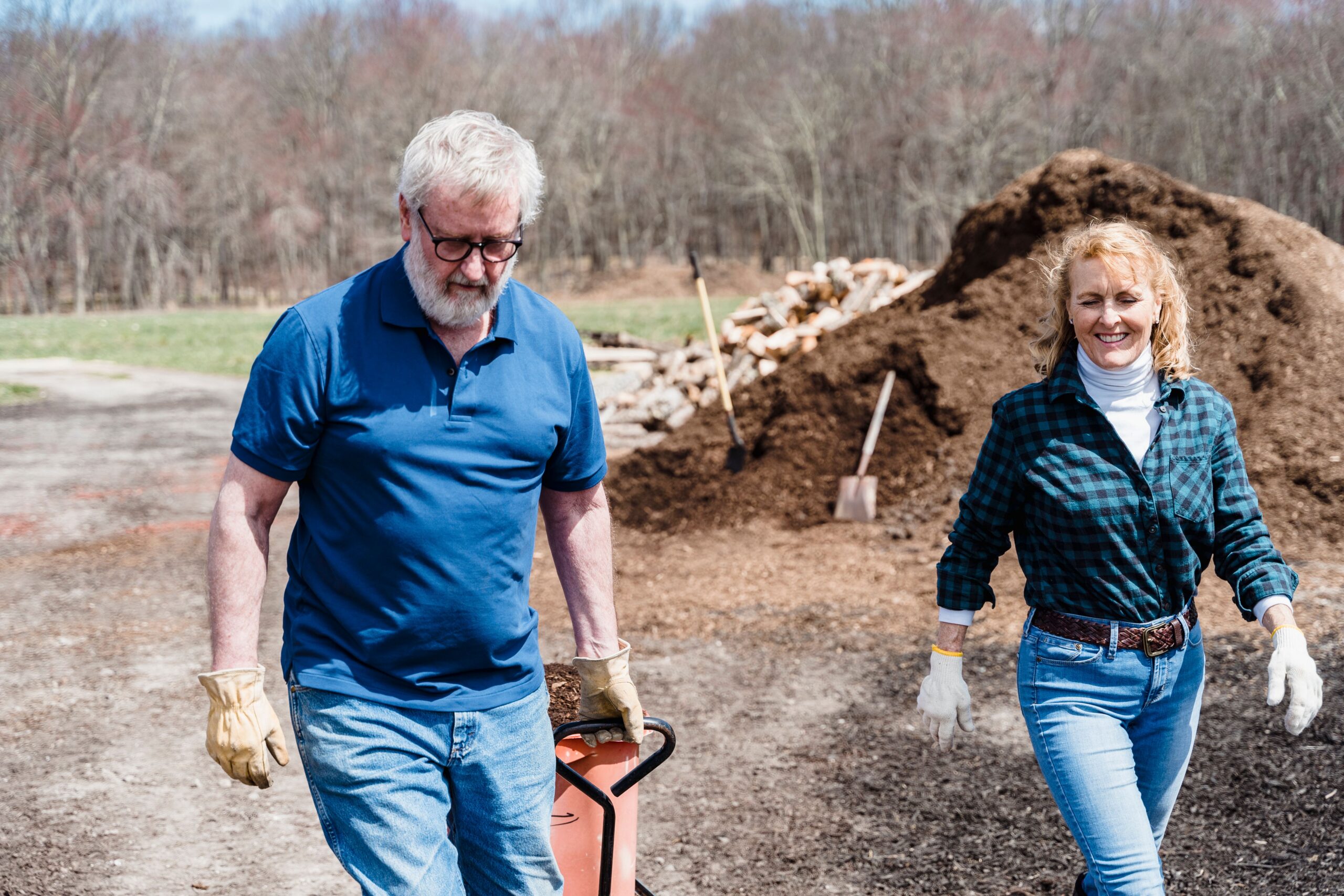
Fresh mulch makes a yard look cared for, so it is no surprise that homeowners pile it on. The problem is that many trees in our area are mulched in a way that quietly harms them. The bed looks neat, the tree looks fine, and the damage shows up two or three years later.
Mulch around trees is one of the best things you can do for root health, but only when it is applied correctly. Here is how mulch helps, where it goes wrong, and what we recommend for Chattanooga yards.
Does Mulch Around Trees Actually Help?
Yes. A properly applied layer of mulch around trees does several jobs that a bare patch of soil or turf cannot:
- Holds moisture. Mulch slows evaporation, which matters during our hot, dry stretches in late summer.
- Moderates soil temperature. Roots stay cooler in July and are buffered from sharp swings in winter.
- Reduces competition. A mulch ring keeps grass and weeds away from the root zone, especially on young trees.
- Protects the trunk. Mulch keeps mowers and string trimmers away from the bark, which is a common source of trunk wounds.
- Feeds the soil. As wood chips break down, they add organic matter and support the microbes that help roots take up nutrients.
In a natural forest, fallen leaves and wood create this layer on their own. Mulch is how we copy that in a yard, where trees often grow in compacted, heavily disturbed soil. Good mulch around trees brings back some of what construction, mowing, and foot traffic take away from the soil.
How Can Mulch Around Trees Hurt Them?
Too much mulch, or mulch in the wrong place, can do real damage. The most common mistake is the mulch volcano, a cone of mulch piled against the trunk.
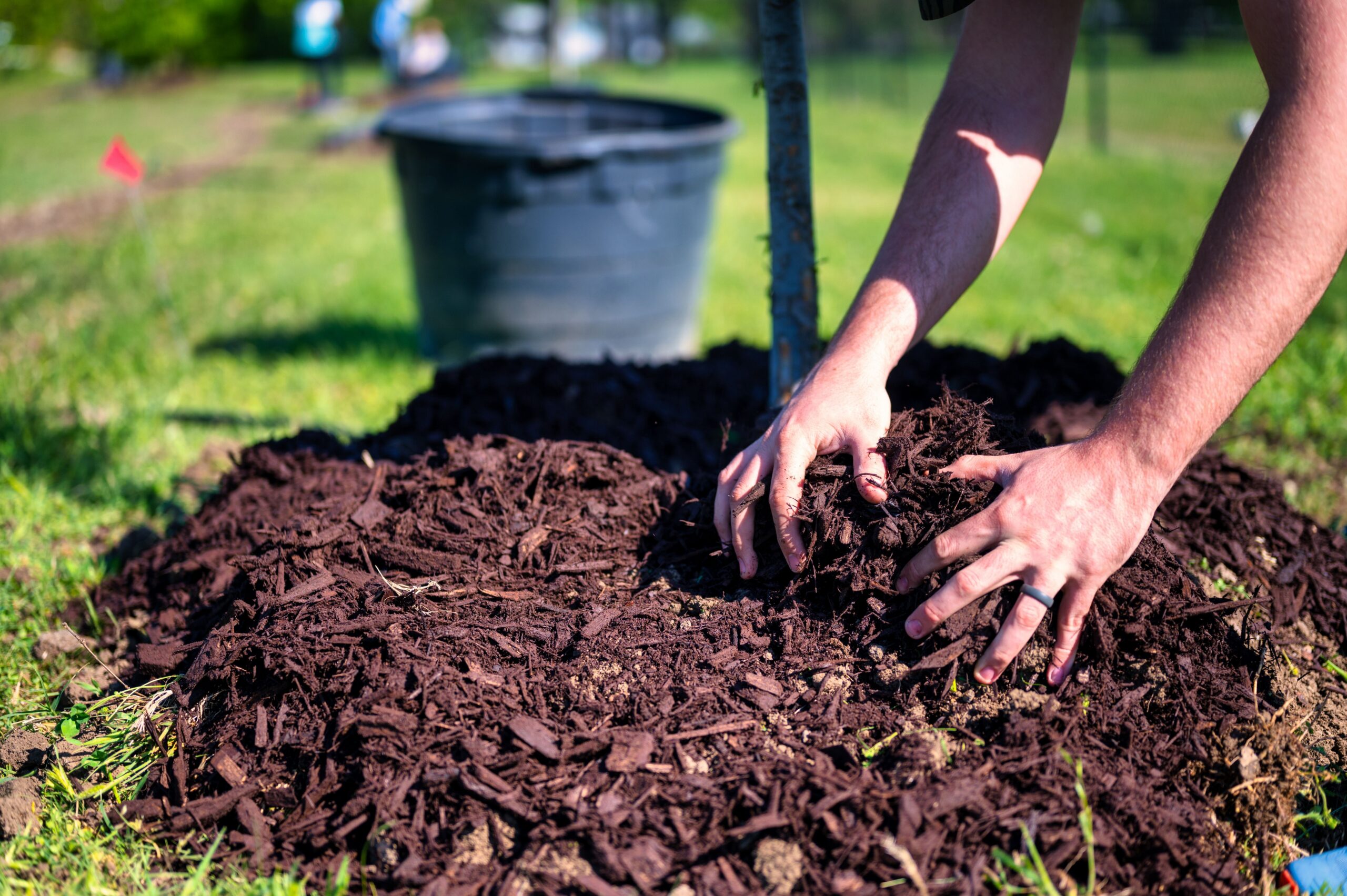
University of Tennessee Extension addresses this directly in its publication on mulching trees and landscapes. Its guidance on mulch around trees is to keep mulch no more than two to four inches deep, and it warns that more than four inches restricts oxygen exchange between the soil and the roots. It describes the volcano style, a cone eight to twelve inches high, as a common error.
Here is what that looks like in practice:
- Bark rot. Constant moisture against the trunk softens the bark and lets decay organisms in.
- Girdling roots. Roots can grow up into the mulch and wrap around the trunk, slowly choking the tree.
- Oxygen starvation. Deep, matted mulch keeps air from reaching the roots.
- Rodent and insect shelter. A deep, undisturbed pile is an ideal hiding place for voles that chew bark.
- Shallow rooting. Roots that grow up into the mulch are more exposed to cold and drought.
These problems build slowly. A tree can look fine for a year or more while the base declines out of sight. If you want to know what hidden root trouble looks like, see our post on tree root damage warning signs.
How Much Mulch Around Trees Is Right?
Our standard approach follows ISA best practices and University of Tennessee guidance. Think of it as a shallow, wide doughnut rather than a tall, narrow volcano.
What Is the Right Depth?
For mulch around trees, aim for two to four inches. Much of Chattanooga sits on heavy clay that drains slowly, so lean toward the lower end of that range. Thick mulch on clay holds water for long periods and can leave roots sitting wet.
How Wide Should the Mulch Ring Be?
Mulch around trees should be as wide as is practical. Ideally the ring reaches the dripline, the outer edge of the canopy, because that is where many of the feeding roots are. A ring at least four to six feet across is a useful minimum for a mid-sized tree, and a wider ring is better.
How Close Should Mulch Be to the Trunk?
Keep it a few inches back so the trunk flare, the place where the trunk widens into the roots, stays visible. If you cannot see the flare, mulch is probably covering it.
What Type of Mulch Is Best?
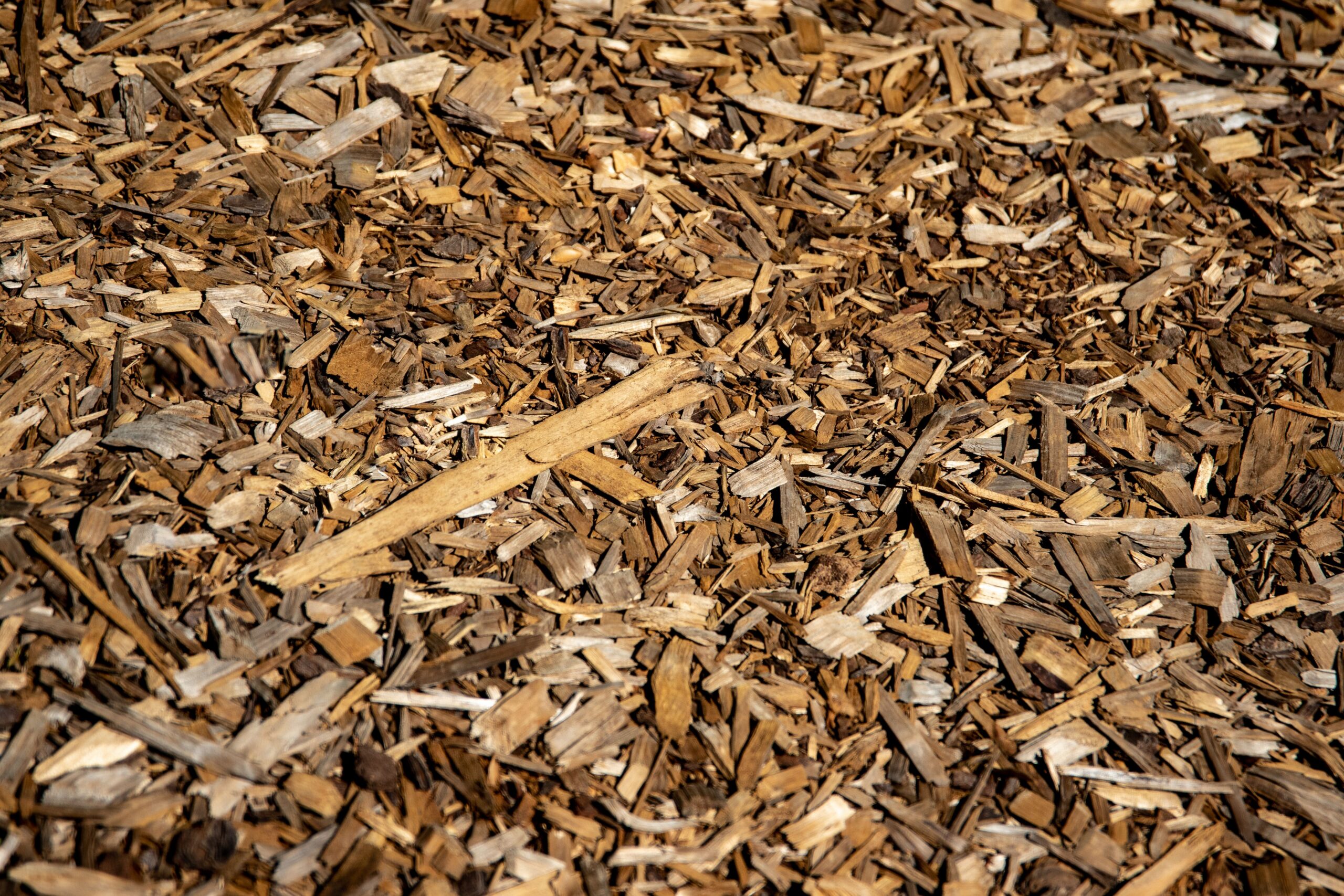
The best mulch around trees is coarse, shredded wood chips or shredded bark. Arborist wood chips are often available inexpensively and include a mix of leaves and wood that breaks down nicely. Avoid plastic sheeting and landscape fabric over the root zone, since they restrict air and water movement. Avoid thick layers of fine, dyed, or fresh-cut material that mats down and sheds water.
Is Fall a Good Time to Add Mulch Around Trees?
It can be. After leaf drop, a fresh layer protects roots through winter and slows moisture loss. This is especially helpful for newly planted trees. For more seasonal advice, see our guide to winter tree care in Chattanooga.
Before adding anything, measure what is already there. If your mulch is two or three inches deep, it may only need a light rake. Mulch settles and breaks down, so loosen the old layer instead of stacking new material on top. Adding a fresh layer every year without removing the old is how a two-inch layer slowly turns into a ten-inch one.
Should You Mulch Newly Planted Trees Differently?
Slightly. A young tree has a small root ball and no established root system to fall back on, so mulch matters more. Use two to three inches, start the ring at least as wide as the root ball, and keep the material a few inches off the trunk.
Mulch around trees that were planted in the last two or three years also needs to be paired with deep, infrequent watering. Mulch holds moisture, but it cannot replace water during a dry spell.
How Often Should You Refresh Mulch?
Most mulch needs a light refresh once a year or every other year. Wood chips break down and settle, so a three-inch layer in spring may be closer to two inches by the following fall. Check the depth with a ruler before you buy a single bag. Getting mulch around trees right once a year is far cheaper than treating a stressed tree later.
What Are the Most Common Mulching Mistakes?
After years of walking Chattanooga properties, we see the same handful of mistakes with mulch around trees again and again:
- Piling mulch against the trunk to make a tidy mound
- Adding a fresh layer every spring without removing the old one
- Using a thick layer of fine, dyed, or fresh-cut material that mats down
- Laying plastic or fabric under the mulch, which blocks air and water
- Mulching only a small circle around the trunk when the roots reach much farther
- Letting turf grow up into the mulch ring so the tree has to compete for water
None of these is hard to fix, and all of them are easier to correct early than late. If you are unsure how your own yard measures up, take ten minutes to check each tree against this list and note any that need attention.
How Can You Tell If Mulch Is Hurting a Tree?
Pull the mulch back from the base and look closely. These signs of poorly applied mulch around trees point to trouble:
- No visible trunk flare, so the trunk goes straight into the ground like a post
- Soft, dark, or peeling bark near the base
- Roots that circle or press against the trunk
- Thinning leaves, small leaves, or early fall color without an obvious cause
- Dieback in the upper branches
- Gnawed bark or tunnels near the base
Often the fix is simple. Pull the mulch back, level it to the right depth, and give the tree a season to recover. If you see signs of decay or girdling, a certified arborist should evaluate it before the problem spreads.
How Do Arborists Fix Over-Mulched Trees?
We see mulch around trees that has built up for years. For a tree in that situation, we start by clearing the excess material and exposing the trunk flare. We then check for girdling roots, decay, and soil conditions.
Depending on what we find, treatment may include root collar excavation, selective root pruning, soil aeration, or a plant health care plan to restore vigor. If a tree has declined too far, we will say so honestly, and a tree risk assessment can help you decide the safest next step.
Get Expert Help With Your Trees
Done right, mulch around trees is simple, inexpensive protection. Two to four inches, a wide ring, and a clear trunk flare are all most trees need.
If you are not sure whether your trees are mulched correctly, or you are seeing signs of decline, schedule a free estimate with Urban Tree. Our certified arborists serve Chattanooga, Signal Mountain, Lookout Mountain, Red Bank, Ooltewah, and surrounding communities. You can learn more about our team as well.
Follow us! Urban Tree Inc