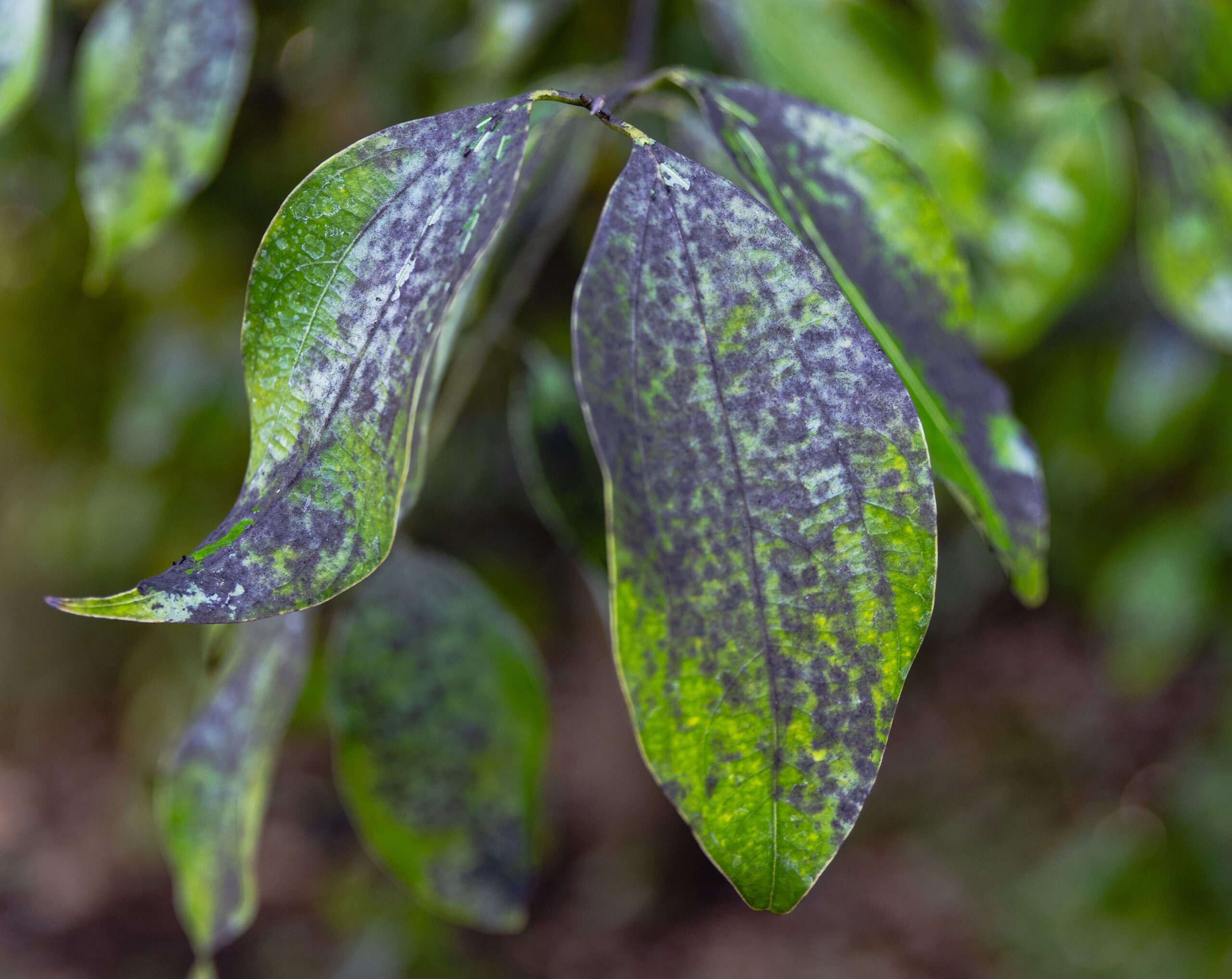
Tree diseases in East Tennessee are common thanks to the region’s warm, humid summers and mild winters create ideal growing conditions for a wide range of tree species, but those same conditions also favor the fungi, bacteria, and insects that cause tree disease. If you own property in the Chattanooga area, knowing the most common tree diseases in East Tennessee, and recognizing them early, can save you the cost of removal. At Urban Tree, we have provided tree care services across greater Chattanooga since 2013, and our team treats these diseases regularly on both residential and commercial properties. This article covers the most common tree diseases found in East Tennessee, what they look like, and what you can do about each one.
What Is Oak Wilt and Why Is It So Dangerous?
Oak wilt is a fungal disease caused by the pathogen Ceratocystis fagacearum. It attacks the water-conducting vessels inside the tree, blocking the flow of water from roots to leaves. The tree dies of dehydration from the inside out. Red oaks are particularly vulnerable and can die within weeks of infection. White oaks are more resistant but can still decline over one to two growing seasons.
The symptoms appear fast. Leaves wilt and turn brown from the edges inward, starting at the top of the canopy and moving downward. On red oaks, the foliage can go from green to completely brown in a matter of weeks. The disease spreads in two ways: through root grafts between nearby oaks (underground root connections that allow the fungus to move from tree to tree) and through insect vectors, specifically sap-feeding beetles that carry spores from infected trees to fresh wounds on healthy ones.
How to treat it: Prevention is the most effective approach. Avoid pruning oaks during spring and summer when sap beetles are most active (April through July in East Tennessee). If a tree is already infected, an arborist can apply a systemic fungicide (propiconazole) via trunk injection on high-value trees. Root barriers, which involve severing root grafts between infected and healthy trees, can stop underground spread. Heavily infected trees should be removed and properly disposed of to limit further transmission.
What Causes Anthracnose and How Do You Spot It?
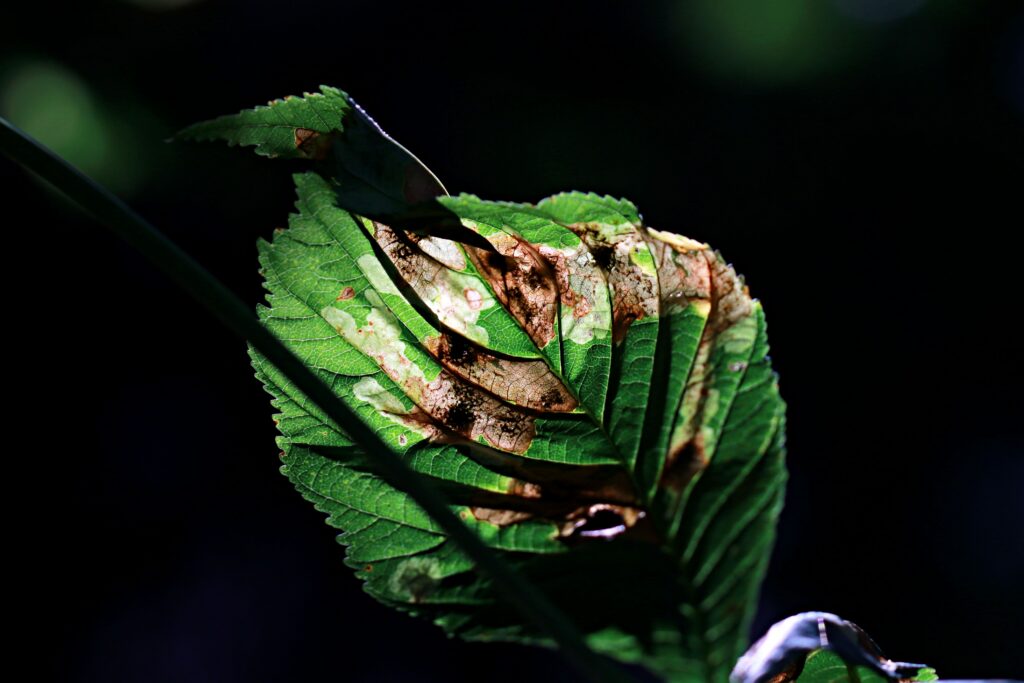
Anthracnose is a group of fungal diseases that affect the leaves and young shoots of hardwood trees. In East Tennessee, dogwoods, sycamores, maples, and oaks are the most common targets. The fungi that cause anthracnose thrive in cool, wet spring weather, which is exactly what Chattanooga gets in March and April.
Symptoms include irregular brown or tan spots on leaves, leaf curling and distortion, premature leaf drop, and in severe cases, twig dieback. On dogwoods, anthracnose can be particularly aggressive (a specific form called dogwood anthracnose, caused by Discula destructiva, has killed large numbers of flowering dogwoods across the Appalachian region since the 1980s).
How to treat it: Most anthracnose infections on mature trees are cosmetic and do not kill the tree. The tree will produce new leaves as the weather warms and dries out. For repeated or severe infections, a fungicide program applied in early spring (before bud break) can reduce the severity. Improving air circulation through pruning, raking and disposing of fallen infected leaves, and avoiding overhead irrigation all help. For dogwood anthracnose specifically, keeping the tree healthy through proper watering, mulching, and fertilization gives it the best chance of fighting off the infection.
What Does Fire Blight Look Like on My Trees?
Fire blight is a bacterial disease caused by Erwinia amylovora. It primarily affects trees in the rose family, which includes ornamental pears (Bradford pears are notorious for it), crabapples, and fruit trees like apples and pears. East Tennessee’s warm, humid springs create perfect infection conditions.
The name describes the look. Infected branches appear scorched, as if someone held a torch to them. Leaves turn black or dark brown and remain attached to the branch instead of falling. Twigs curl into a characteristic shepherd’s crook shape at the tips. The infection spreads rapidly through the tree and can kill young trees in a single season.
How to treat it: Prune infected branches at least 12 inches below the visible infection. Sterilize pruning tools between every cut with a 10% bleach solution or 70% rubbing alcohol. Do not prune during wet weather, as moisture helps the bacteria spread. Copper-based sprays applied at bloom time can reduce the risk of infection. For trees with repeated fire blight problems, consider replacing them with resistant cultivars rather than fighting the same battle every year. Fire blight is one of the fastest-moving tree diseases in East Tennessee, so early pruning matters.
Why Are My Pine Trees Turning Brown?
Pine decline is one of the more misdiagnosed tree diseases in East Tennessee homeowners deal with. There is one of three causes: pine bark beetles, Diplodia tip blight, or Dothistroma needle blight. Each one looks slightly different, but all of them can turn a green pine brown.
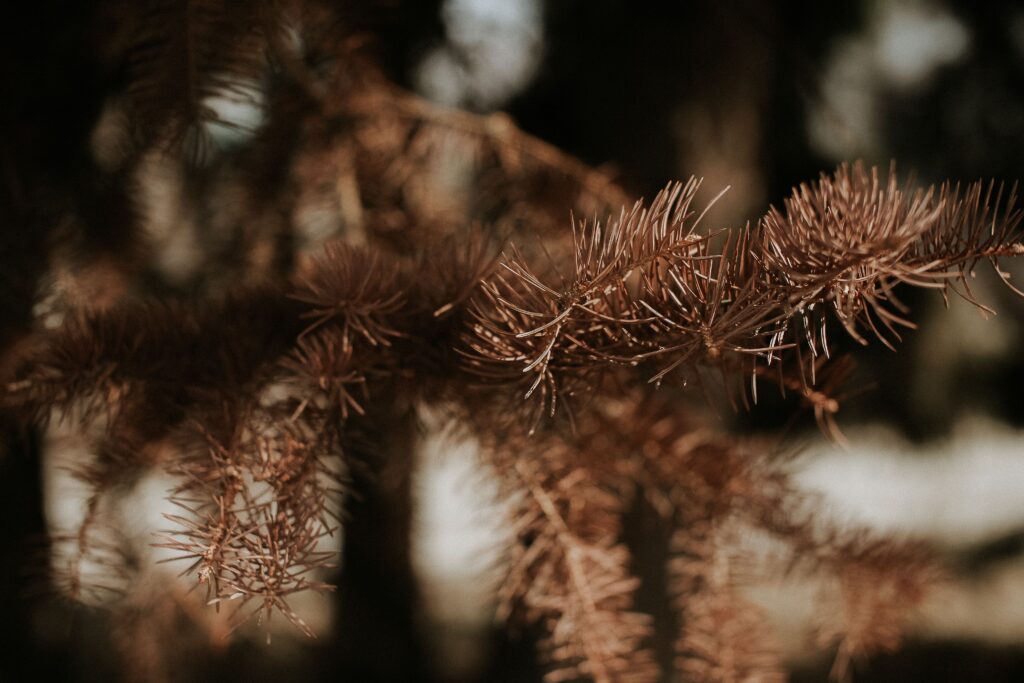
Pine bark beetles (Ips and Dendroctonus species) bore into stressed pines, particularly during drought. You will see small round holes in the bark, reddish-brown boring dust on the trunk, and the crown turning from green to reddish-brown over a period of weeks. By the time you notice the color change, the tree is usually too far gone to save.
Diplodia tip blight affects new growth in the spring. New candles (the elongating shoots at branch tips) turn brown and fail to expand, giving the tree a stunted, ragged appearance. It is especially common on Austrian pines and Scots pines.
Dothistroma needle blight causes reddish-brown bands on needles, followed by premature needle drop. It starts in the lower canopy and works upward over several years.
How to treat it: For bark beetles, prevention is the only realistic option. Keep pines healthy with proper watering during drought and avoid wounding the bark. Infested trees should be removed promptly to prevent beetle populations from spreading. Diplodia tip blight responds to fungicide treatments applied at bud swell in spring. Dothistroma needle blight can be managed with copper-based fungicides applied in late spring.
What Is Leaf Spot Disease and Should I Worry About It?
Leaf spot is a catch-all term for a variety of fungal and bacterial infections that cause spots on tree leaves. In East Tennessee, you will see leaf spot on maples, oaks, elms, and dogwoods, especially during wet growing seasons. The spots may be brown, black, tan, or reddish, and they vary in size from tiny dots to large irregular patches.
Most leaf spot diseases are cosmetic. They make the tree look rough but rarely cause serious health problems for an established tree. The exception is when infection is severe enough to cause heavy premature defoliation (leaf drop) year after year. Repeated defoliation weakens the tree over time, making it vulnerable to other stressors.
How to treat it: Good sanitation is the first line of defense. Rake and dispose of fallen leaves in autumn to reduce the number of fungal spores overwintering on the ground. Improve air circulation through selective pruning. Avoid watering foliage directly (use drip irrigation or soaker hoses instead). For high-value ornamental trees with chronic leaf spot, a preventive fungicide program applied in early spring can keep the disease in check.
How Can You Prevent Tree Diseases in East Tennessee?
The best defense against tree disease is a healthy tree. Trees that are properly watered, mulched, pruned, and growing in suitable conditions fight off infections far more effectively than stressed trees. Here are some practical steps that work well in East Tennessee’s climate:
Water deeply during drought. East Tennessee gets plenty of rain most years, but dry stretches in July and August can stress trees, especially those in compacted urban soils. A slow, deep soaking every two weeks during dry periods keeps roots hydrated without overwatering.
Mulch correctly. Apply 2 to 4 inches of organic mulch (wood chips, shredded bark) in a ring around the tree, starting a few inches away from the trunk and extending to the drip line or as far as practical. Do not pile mulch against the trunk. Mulch volcanoes (those tall mounds of mulch banked against the trunk) trap moisture against the bark and create ideal conditions for fungal infection and bark rot.
Prune at the right time. In general, prune in late winter or early spring before new growth begins. Avoid pruning oaks from April through July (oak wilt risk). Do not prune during wet weather (fire blight risk). Always use clean, sharp tools.
Monitor your trees regularly. Walk your property and look at your trees with purpose at least twice a year, once in spring when everything is leafing out and once in late summer. Look for unusual spots on leaves, dead branches, bark damage, and any mushrooms or fungal growths at the base.
At Urban Tree, our plant healthcare program includes disease monitoring, preventive treatments, and soil management for residential and commercial properties across the Chattanooga area. Our team can identify problems early, before they become expensive or irreversible.
Frequently Asked Questions
Can tree diseases spread to other trees on my property?
Yes. Many tree diseases spread through root connections, wind-carried spores, insect vectors, and contaminated pruning tools. If you notice disease on one tree, have an arborist inspect nearby trees of the same species, especially oaks (which often share root grafts with their neighbors).
Is it better to treat a diseased tree or remove it?
It depends on the severity, the species, the location, and the tree’s overall value to your property. Early-stage infections in high-value trees are usually worth treating. A tree with advanced decay, heavy infestation, or a disease that threatens surrounding trees may be better off removed. A professional arborist can walk you through the cost-benefit analysis.
When is the best time to apply fungicide treatments?
For most diseases in East Tennessee, early spring (before bud break) is the most effective window. Some diseases require a second application during the growing season. The timing depends on the specific pathogen. An arborist or plant healthcare specialist can build a treatment calendar for your property.
Are certain tree species more disease-resistant than others?
Yes. When planting new trees, consider species and cultivars with proven disease resistance for your area. For example, Kousa dogwoods are far more resistant to dogwood anthracnose than native flowering dogwoods. Disease-resistant oak cultivars can reduce your exposure to oak wilt. Your arborist or local agricultural extension office can recommend suitable species for East Tennessee.
Does Urban Tree offer plant healthcare services?
Yes. At Urban Tree, we provide plant healthcare programs that include disease monitoring, preventive treatments, soil management, and ongoing tree health assessments for residential and commercial properties. We serve the greater Chattanooga area, including Lookout Mountain, Signal Mountain, Ooltewah, Collegedale, Soddy Daisy, and all communities within a 70-mile radius. Call (423) 322-9236 or visit geturbantree.com for more information.
Follow us! @geturbantree